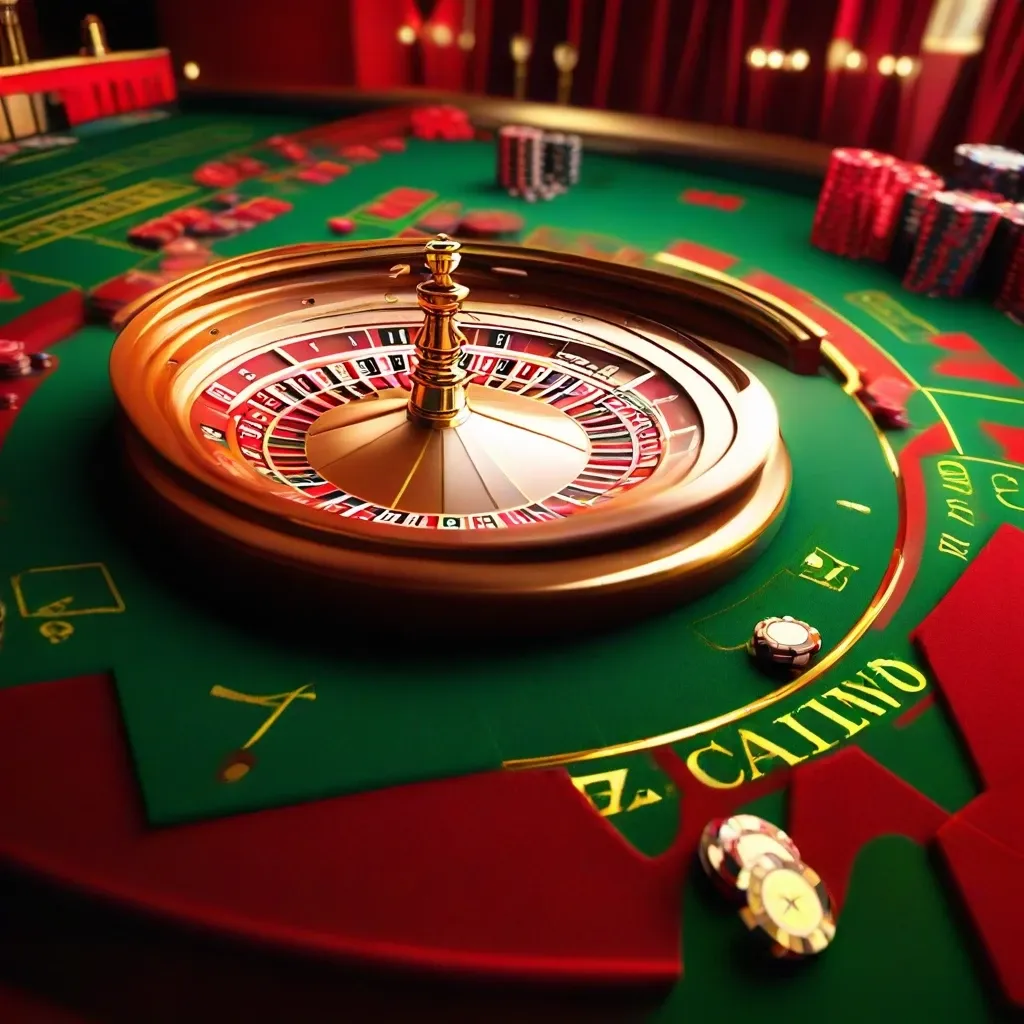
The flashing lights, the palpable tension, the alluring possibility of a big win – the world of casino gaming is a captivating experience. Whether you’re stepping into a brick-and-mortar establishment or logging into an online casino, the array of games available can be both exciting and overwhelming. But among the numerous options, two games consistently stand out: Blackjack and Roulette.
For many, the initial decision of which game to play can be a real head-scratcher. Do you opt for the strategic card play of Blackjack, or the thrilling spin of the Roulette wheel? I still remember my first time in a casino, feeling utterly lost amidst the sea of tables. Ultimately, I picked one and dove in headfirst. While I am not going to reveal my favorite just yet, this guide that will explore a detailed comparison between Blackjack and Roulette. The aim is to equip you with the knowledge needed to make an informed choice, so you can confidently place your bets and maximize your enjoyment.
Blackjack Basics
Blackjack, also known as 21, is a casino game where the goal is to beat the dealer by having a hand total closer to 21 without going over. Players and the dealer each receive two cards to start. The players can then choose to “hit,” taking another card, or “stand,” keeping their current hand. The dealer also hits or stands according to specific rules. Other options might include “double down” which doubles your bet for one more card or “split” when you have two of the same card.
Knowing when to hit or stand can greatly increase the odds of winning. While luck plays a role, Blackjack isn’t purely a game of chance. Blackjack basic strategy charts provide mathematically optimal plays depending on a player’s hand and the dealer’s visible card. The strategy is not foolproof, but adhering to the right approach improves your odds. There was one time when, armed with a basic strategy chart, I confidently stood on a 16 against the dealer’s 10. Most people at the table were signaling for me to hit. The dealer drew a face card and busted. A small victory, but a victory nonetheless earned by using strategy!
Card Values and Hand Rankings
In Blackjack, number cards hold their face value. Face cards (King, Queen, Jack) are worth 10. The Ace can be either 1 or 11, depending on which value benefits the hand more. A hand containing an Ace and a ten-value card is called a “Blackjack” or a “natural 21,” and it typically pays out at 3:2 odds. It’s the best hand you can get! Understanding the value of each card is crucial. I recall one game where I initially miscalculated an Ace as 1 instead of 11. It wasn’t until the dealer pointed it out that I realized I had a Blackjack all along and won the round. Keep the values straight!
Roulette Rundown
Roulette, a casino staple, revolves around predicting where a small ball will land on a spinning wheel. Mastering the game involves grasping the wheel’s nuances, understanding betting options, and recognizing the distinctions between American and European versions. The core objective remains consistent: accurately forecast the ball’s final resting place after the wheel comes to a halt.
Gameplay is straightforward. Players place bets on a numbered layout corresponding to the wheel’s pockets. Once bets are placed, the wheel is spun, and a ball is released onto its rotating surface. Where the ball lands determines the winning number and subsequently, which wagers are paid out. However, the betting options add layers of complexity.
Bets are broadly categorized into inside and outside bets. Inside bets focus on specific numbers or small groups of numbers. These include straight-up bets (a single number), split bets (two adjacent numbers), street bets (a row of three numbers), and corner bets (a group of four numbers). Outside bets cover broader categories like red/black, odd/even, high/low (numbers 1-18 or 19-36), dozens (1-12, 13-24, 25-36), and columns (vertical rows of twelve numbers). The payouts for each bet type vary depending on the probability of winning.
A significant difference lies between American and European Roulette. I remember one evening, confidently placing bets, only to realize the American wheel’s double zero significantly altered the odds. The American version includes an additional “00” pocket, which increases the house edge compared to the European version, which only has a single “0.” That night, I switched to betting on the European table.
Understanding the Roulette Wheel
The Roulette wheel isn’t just a spinning apparatus; its layout directly influences the game’s dynamics. Inspecting the number sequence reveals an apparently random arrangement, designed to distribute high and low numbers, as well as odd and even numbers, as evenly as possible around the wheel’s circumference. However, this seemingly chaotic arrangement doesn’t negate the key distinction between the European and American wheels: the presence or absence of that “00”.
The European wheel features numbers 1 through 36 and a single zero (0). The American wheel mirrors this but adds a double zero (00). This seemingly minor difference has a considerable impact on the house edge. I remember the moment I saw the ball land on a number in one of my first games of roulette: I felt so happy that I had picked that number, and realized the wheel had an impact on the gaming outcome. What did I do? I kept playing until I had no budget left.
Deciphering the Odds
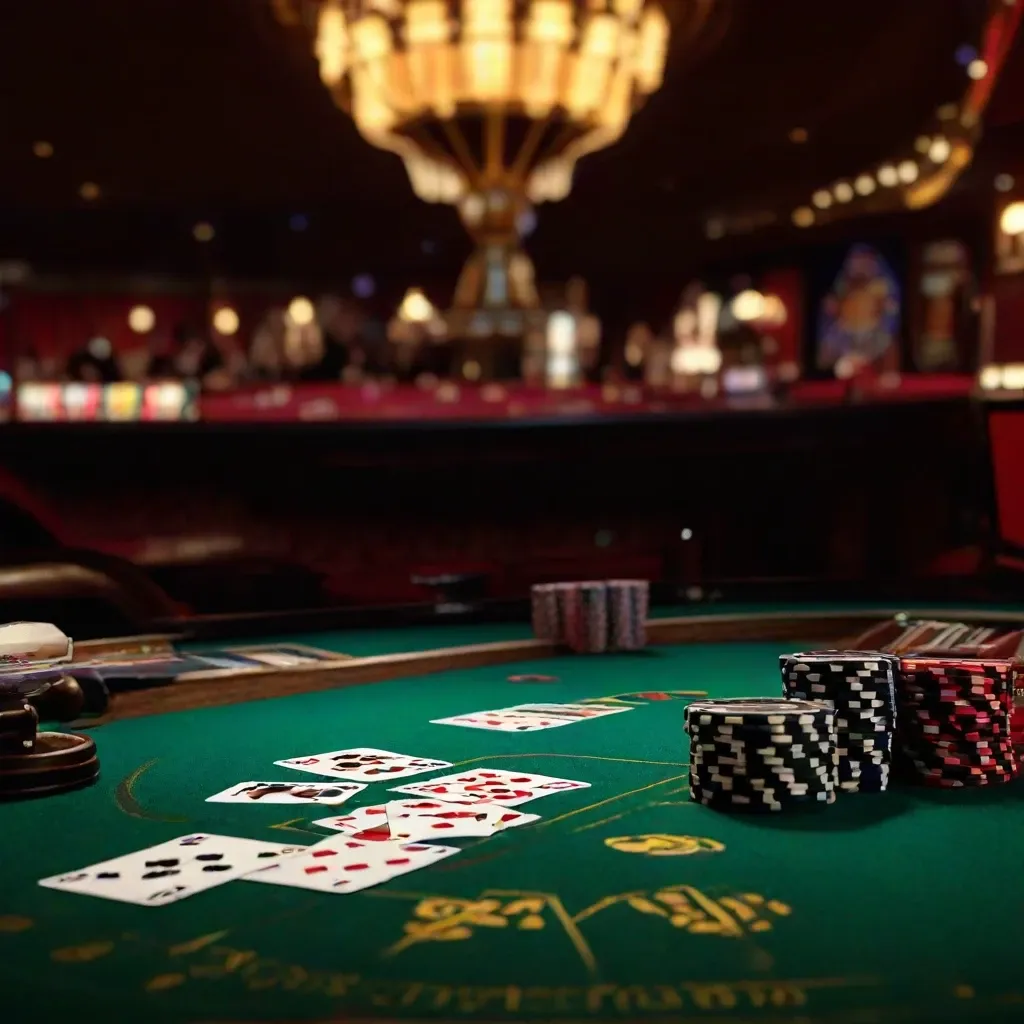
Understanding the house edge is absolutely crucial when venturing into the realms of Blackjack and Roulette. The house edge represents the casino’s average profit from a player’s bet, expressed as a percentage. It’s the silent force dictating the long-term outcome. In Blackjack, employing an optimal strategy can astonishingly lower the house edge to below 1%, making it one of the most favorable casino games for players. However, deviations from this strategy quickly erode your advantage. Roulette, on the other hand, presents a steeper climb. European Roulette, with its single zero, carries a house edge of approximately 2.7%. American Roulette, with both a single and double zero, nearly doubles the house edge to around 5.26%.
The payout structures also vary significantly. Blackjack typically pays 3:2 for a natural (a starting hand of 21), and 1:1 for other wins. Roulette payouts are diverse, ranging from 35:1 for a straight-up number bet to 1:1 for even-money bets like red/black or odd/even. Understanding these payouts, alongside the probability of winning each bet, helps you calculate the expected value – a key metric for assessing the profitability of a wager. Ignoring the odds can be a costly mistake. There was a game that I remember where I was mesmerized with the colors of the roulette and lost my focus.
The Impact of Variations and Side Bets
The baseline odds aren’t the whole story; rule variations in Blackjack have a considerable impact on the house edge. For instance, if the dealer hits on a soft 17, the house edge increases slightly. Similarly, the number of decks used also influences the odds. In both Blackjack and Roulette, side bets offer tempting potential payouts but come at a price – a significantly increased house edge. Take Blackjack side bets like “21+3” or “Perfect Pairs,” or Roulette’s five-number bet; these bets have much worse odds. I recall a situation where I initially leaned towards placing a Blackjack side bet due to its enticing payout. However, upon closer examination of the odds and potential impact, I decided to stick to the basic game, even without a big win I know I did the right decision because the house edge was too great.
Strategy Showdown
Blackjack and Roulette, while games of chance, offer avenues for strategic play. In Blackjack, the basic strategy chart is a player’s bible, dictating the optimal move for any given hand versus the dealer’s upcard. Mastering this chart drastically reduces the house edge. Roulette, on the other hand, sees players employ betting systems like the Martingale (doubling bets after a loss), the Paroli (increasing bets after a win), or the D’Alembert (adjusting bets based on the previous outcome).
It’s vital to acknowledge that no foolproof strategy guarantees a win in either game. These strategies are about managing risk and bankroll effectively. They aim to extend your playtime and potentially capitalize on winning streaks, but the inherent randomness of the games remains. I once got caught up in thinking doubling my bet after each loss in Roulette would work. It was a great lesson in how fast you can loose everything.
Risk Management and Bankroll Control
Solid risk management and bankroll control are important if you are playing Blackjack or Roulette. Before placing a single bet, setting clear loss limits and achievable profit targets can keep you in check. It’s about deciding how much you’re willing to lose and when you’re content to walk away with your winnings. Proper bet sizing is also vital; a general rule of thumb is to wager only a small percentage of your bankroll per bet. It promotes responsible gambling, ensuring that your gaming remains a recreational activity rather than a financial gamble.
The Thrill Factor
The psychology of gambling is a complex interplay of factors, shaping our preferences for different games. Blackjack, for example, often attracts those who appreciate a sense of control. The game’s strategic elements, from card counting to deciding when to hit or stand, provide an illusion of mastery over the outcome. This feeling of control can be incredibly appealing, especially to individuals with a higher aversion to risk. The excitement in Blackjack comes from calculated decisions and the potential to outsmart the dealer.
Roulette, on the other hand, throws control out the window. Its thrill lies in pure, unadulterated chance. The spinning wheel, the bouncing ball – it’s a spectacle of randomness. For some, this lack of control is liberating. It allows them to embrace the unpredictable nature of the game and simply enjoy the ride. Different personalities are drawn to different games, depending on the level of risk and control that they enjoy.
Social Atmosphere and Player Interaction
Blackjack is commonly known as a sociable game which promotes opportunities for player interaction. From casual banter with other players to engaging with the dealer, this social gambling creates a sense of community. Conversely, Roulette can often feel like a more solitary pursuit, your experience is primarily with the wheel itself.
Choosing Your Champion
Finding the right game is like finding the perfect dance partner – it’s all about synergy and understanding. Don’t just jump into the first game you see; consider your own strengths, weaknesses, and what you’re really looking for in an experience. Think of it as matchmaking for entertainment.
Beginner’s Luck (and Learning): New to the scene? Games with simpler rules and lower stakes are your best bet. Focus on grasping the basics without feeling overwhelmed. These are games where you can learn by doing, experimenting with strategies without risking too much in the process.
Control Freaks and Calculated Risks: If you like to strategize and minimize risk, look for games where skill plays a bigger role than chance. These games allow careful planning, letting you control the outcome more directly.
For the Thrill-Seekers and High Rollers: Adrenaline junkies, this is your call. High-risk, high-reward games offer the intensity you crave, offering the potential for big wins. But remember, big wins come with equally big risks. Knowledge is your ally; dig into the odds, understand the mechanics, and go in with your eyes wide open.
Ultimately, the “perfect” game is the one you genuinely enjoy. By aligning your game selection with your personal preferences, skill level, and risk tolerance, you’re setting yourself up for an experience that’s both fun and potentially rewarding. Now, go forth, explore, and discover your champion game. The thrill of the win awaits!
Responsible Gaming
Blackjack and Roulette offer exciting entertainment, but it’s vital to approach them with a strong commitment to responsible gambling. The thrill of the game should never overshadow the importance of personal well-being.
One of the most effective strategies is setting clear limits before you even begin to play. Decide on a specific budget and a time frame, and stick to them rigorously. Avoid the temptation to chase losses or exceed your predetermined limits. It also can be handy to set the amount to win, and when achieved, stop playing for the day.
Awareness is another key component. Be alert to the signs of problem gambling, such as spending more than you can afford, neglecting responsibilities, or feeling anxious or irritable when not gambling. If you recognize these signs in yourself or someone you know, it’s crucial to seek help.
Numerous resources are available for those struggling with gambling addiction. Many organizations offer confidential support, counseling, and self-exclusion programs. Taking advantage of these resources is a sign of strength, not weakness. Remember, responsible gambling ensures that Blackjack and Roulette remain enjoyable pastimes, not sources of stress or financial hardship.
Conclusion
In summary, Blackjack and Roulette offer distinct thrills for casino enthusiasts. Blackjack hinges on skill and strategic decision-making against the dealer, while Roulette relies more on chance and the excitement of predicting where the ball will land. Understanding the odds, employing basic strategies, and choosing the right game variation are vital for maximizing your enjoyment and potential winnings in either game.
The key takeaways are clear: research and understand before you wager. Whether you’re drawn to the calculated moves of Blackjack or the captivating spin of Roulette, responsible gambling remains paramount. Always gamble within your means, set limits, and remember that these games should be a source of entertainment. If the fun fades and problems arise, remember to seek help. Embrace Blackjack and Roulette as exciting pastimes and further exploration of both, just keep responsible gaming as the cornerstone of your experience.